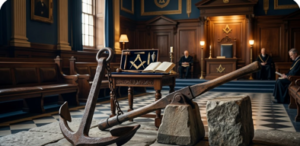
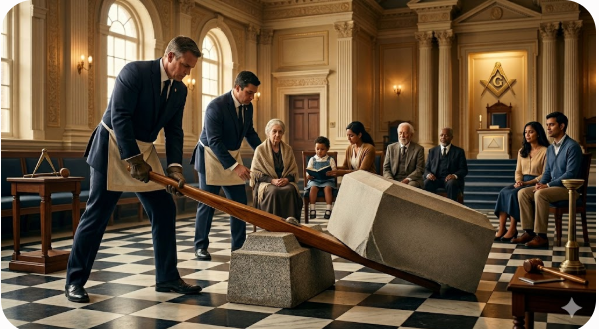
In operative Masonry, an ashlar is a stone shaped by hard work and skill. In speculative Masonry, it becomes a symbol of personal growth. The rough ashlar represents the unfinished person. The perfect ashlar represents discipline, moral development, and a life of service. But there is another kind of ashlar we often overlook, the community ashlar.
The community ashlar is not one person. It is the shared life around us: our neighborhoods, churches, schools, lodges, families, veterans, widows, children, and the many people carrying quiet burdens we may never see. Like each of us, the community is never fully complete. It must be shaped, strengthened, and lifted by people who understand that service is not something extra, it is part of who we are supposed to be.
This is where the idea of charitable leverage becomes important.
Why Charity Needs Structure
Charity based only on emotion tends to be occasional. Someone is hurting, a need becomes visible, and good people respond. There is real value in that. A meal, a donation, a ride, or a hospital visit can change someone’s day, and sometimes their life.
But organized relief asks a deeper question: How can we make compassion something we can repeat, not just something we feel?
When charity becomes organized, it stops being a moment and becomes a tool.
Charity as a Working Tool
Freemasonry teaches that relief is not just a private virtue; it is a shared duty. The distressed brother, the widow, the orphan, and the suffering neighbor are not ideas. They are real people who have a claim on our conscience and our responsibility.
Relief means lifting pressure from someone who can’t carry it alone. A good charitable system works like a lever. It doesn’t replace personal responsibility or take away dignity. It simply applies help at the right point so a burden becomes lighter.
One person can help one family. A lodge can help several. But a coordinated system of lodges, members, donors, and community partners can help far more. When giving is organized, tracked, and communicated, the same dollar or hour of service reaches farther because it is part of a larger effort.
This is charitable leverage, not bureaucracy, but dependable compassion.
Giving vs. Organized Relief
Giving is a single act. Organized relief is a system of acts working toward a purpose.
Most lodges already give in many ways, such as scholarships, food drives, funeral help, disaster relief, youth programs, and support for families in crisis. These acts matter. But without structure, they can be hard to measure, repeat, or grow.
Organized relief helps answer simple but important questions:
- Who needs help?
- What kind of help is appropriate?
- Who will follow up?
- What resources do we have?
- Has help already been given?
- Did it make a difference?
- How do we prepare for future needs?
These questions don’t make charity cold. They make it reliable.
Raising the Community Ashlar
“Raising the community ashlar” means taking the lessons we learn in the lodge and applying them to the world around us. A man may work on himself, but that work should eventually benefit others.
A scholarship is more than money; it is a belief in a young person’s future. Help to a widow is more than assistance; it is a promise that she is not forgotten. Support for a family in crisis is more than emergency aid; it is proof that moral institutions still matter.
Every time organized goodwill reduces suffering, strengthens families, supports education, or preserves dignity, the community ashlar rises.
Why Structure Matters
Good intentions are important, but good systems protect them.
Many charitable efforts fail not because people stop caring, but because there is no continuity. Officers change. Records get lost. Needs are discussed but not assigned. Follow-up is assumed but never done. A project begins with excitement and fades when the person leading it steps away.
A simple, repeatable framework helps a lodge:
- Identify needs
- Categorize types of relief
- Assign responsibility
- Track funds or resources
- Protect confidentiality
- Document outcomes
- Report to leadership
- Maintain continuity year after year
A lever works because it focuses effort. A good giving model does the same.
FULCRUM’s Role in Charitable Work
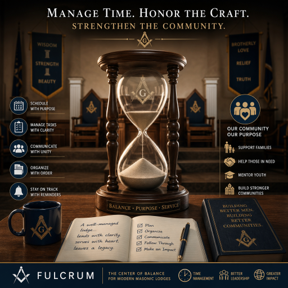
FULCRUM becomes especially meaningful when it helps a lodge organize its charitable work, not as an afterthought, but as part of its core purpose.
A lodge should be able to:
- Record a need
- Connect it to an approved charitable purpose
- Assign follow-up
- Track support
- Preserve a responsible history
- Protect privacy
When members give, they should know their contributions are being used wisely and for real needs.
FULCRUM doesn’t replace the heart of charity, it strengthens it.
The Power of Being Dependable
One of the greatest strengths a lodge can offer is dependability.
Dependability shows the community that the lodge is active and purposeful. It shows members that their work matters. It shows those in distress that help is not random or accidental.
Repeatable relief also strengthens the lodge itself. Members stay engaged when they see real impact. New members understand the Craft better when they see its values in action. Officers lead more effectively when charitable work is organized and visible.
A lodge that gives well teaches without speaking.
Charity With Dignity
A good giving model must protect dignity.
Charitable work should never turn someone’s private hardship into public information. Lodges must handle these matters with care, discretion, and respect. Documentation should protect the work, not expose the person.
This is why roles, permissions, and limits matter. Not everyone needs to know every detail. The system should support wise leadership while protecting the people being helped.
Charity is most honorable when it is both effective and discreet.
From Principle to Platform
FULCRUM’s giving model is more than a feature; it is an expression of purpose.
A fulcrum is the point where force is applied to move something heavier than one person could move alone. That is exactly what organized relief does. It gathers the strength of many and applies it with direction.
The rough places in the community will not smooth themselves. The burdens around us will not lift themselves. The needs of widows, families, students, neighbors, and brothers will not wait for perfect conditions.
The work must be done by those willing to put their hands on the lever.
FULCRUM exists to help lodges do that work with order, dignity, and purpose.