The Pillars Inside the Modern Masonic Lodge
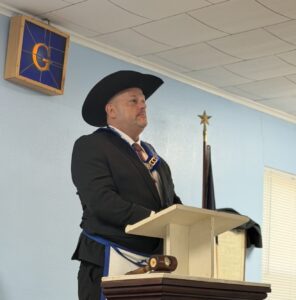
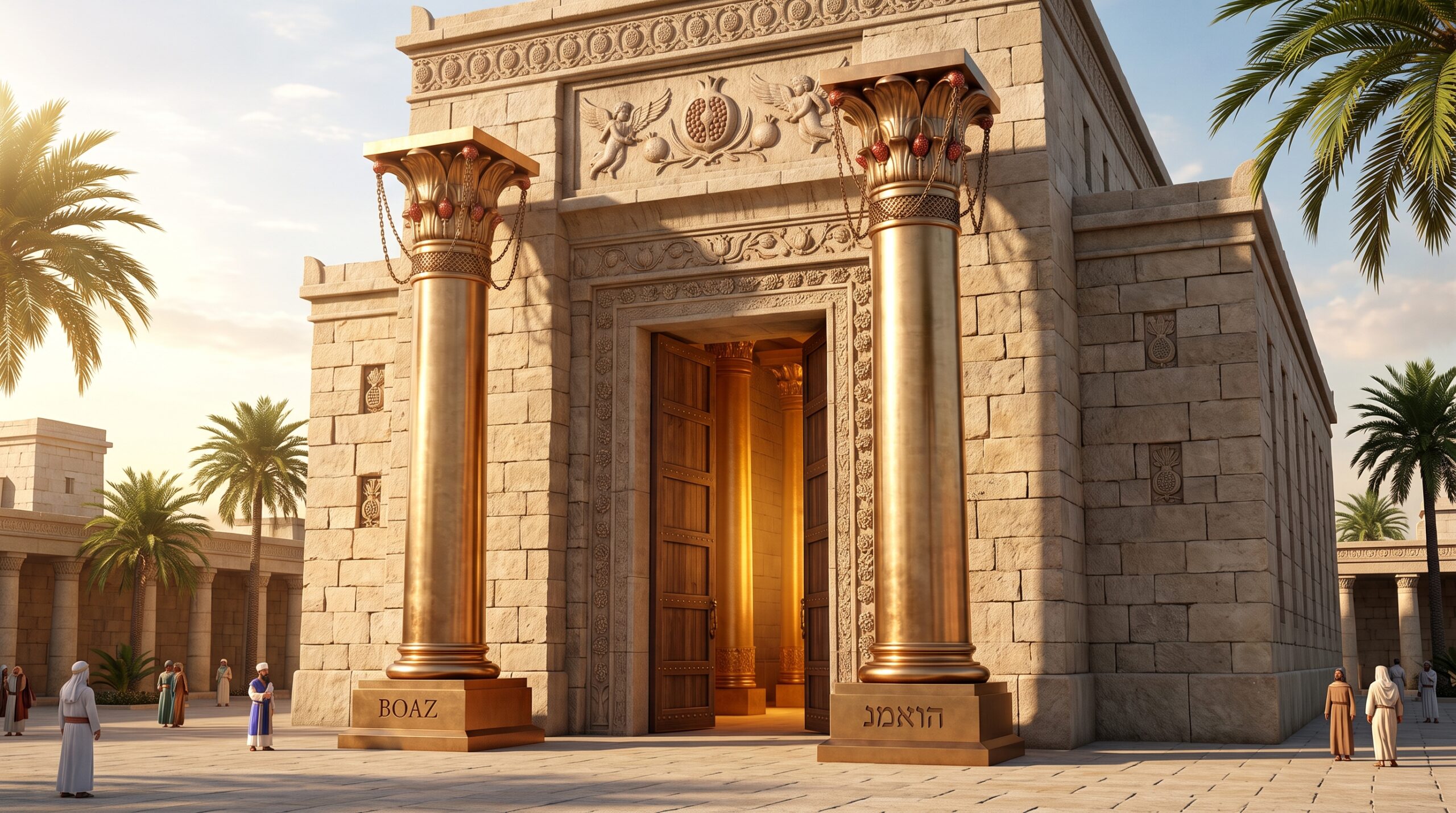
In a modern lodge, Jachin and Boaz may appear as substantial physical columns, stylized architectural elements, symbolic representations, or parts of instructional imagery depending upon the jurisdiction and local building. There is no single worldwide arrangement governing every Masonic lodge, which is why photographs of lodge rooms from different countries can look remarkably different while still expressing related symbolic ideas. A current Grand Lodge of Ohio discussion specifically notes that there is no universally standardized use of physical columns, even though twin pillars are common Masonic symbols internationally. This variation offers a useful lesson for anyone writing or teaching about Freemasonry: distinguish the universal principle from the local expression. A Mason familiar with the customs of Texas, Ohio, England, Scotland, or another jurisdiction should not automatically assume that his local arrangement defines the Craft everywhere. What remains remarkably persistent is the symbolic memory of two pillars associated with the entrance of Solomon’s Temple. That continuity allows the lodge room to function as a kind of three-dimensional textbook. Rather than reading a paragraph stating that strength and stability are necessary for moral life, the Mason sees architectural forms that give those concepts physical presence. Repeated exposure can unfortunately turn those forms into background scenery. Masonic education reverses that process. It asks the Mason to look again. Why are there two? Why do they have names? Why are they associated with an entrance? Why do biblical accounts mention their decorations? Why did later Masons preserve them? Questions like these transform furniture into curriculum and familiarity into inquiry.
Establishment and Strength: The Central Masonic Lesson
Taken together, the traditional interpretations of Jachin and Boaz provide one of the most practical formulas within Masonic symbolism: a worthy life must be both established and strong. Establishment concerns foundation, order, stability, and proper orientation. Strength concerns the ability to preserve what has been established when pressure arrives. The two ideas depend upon one another. Consider integrity as an example. A man may sincerely establish a principle that he will tell the truth, but that principle becomes meaningful only when telling the truth costs him something. At that moment, establishment requires strength. The same applies to friendship, leadership, marriage, public service, scholarship, and Masonic obligation. Values announced under comfortable conditions are architectural drawings; character under pressure is the completed building. This is why the traditional paired meanings carry more educational power than either concept alone. Grand Lodge educational material summarizes the pillars through precisely these ideas of establishment and strength, demonstrating how deeply this pairing has entered Masonic interpretation. Yet strength should not be confused with domination. A strong pillar does not bully the building beside it; it remains true under load. Masonic strength can therefore be understood as disciplined steadiness—the capacity to remain upright when convenience, pride, anger, fear, or social pressure encourage another course. Jachin asks what has been established within us. Boaz asks whether it possesses sufficient strength to endure. Together they turn an ancient architectural image into an examination of conscience: What principles support my life, and will those principles remain standing when they are tested?
The Pillars as a Threshold, Balance, and Masonic Education
One of the richest ways to understand Jachin and Boaz is as a threshold experience. Their biblical position before the Temple makes this interpretation almost unavoidable at the architectural level: the visitor encounters them in approaching the sanctuary. In Masonic reflection, a threshold symbolizes change. We pass from ignorance toward knowledge, from disorder toward greater discipline, from passive membership toward active study, and from merely seeing a symbol toward understanding the questions embedded within it. The pillars also naturally invite reflection on paired concepts—not because every pair of opposites should automatically be imposed upon them, but because two complementary structures standing across an entrance visually encourage comparison. Establishment and strength offer the strongest traditional starting point. From there, a Mason might carefully explore relationships such as thought and action, knowledge and character, contemplation and labor, individuality and brotherhood, or stability and movement. The danger appears when symbolism becomes a blank canvas onto which anything can be projected. Disciplined Masonic education needs boundaries. Biblical evidence should be identified as biblical evidence; archaeological hypotheses should be identified as hypotheses; Masonic interpretations should be identified as Masonic interpretations; personal reflections should be honestly labeled as personal reflections. Scholars themselves acknowledge that the original function and significance of Jachin and Boaz remain uncertain, with proposals ranging from royal insignia to religious or cosmic symbolism. That uncertainty should excite the serious Mason rather than frustrate him. It means the pillars can teach not only morality but methodology: look closely, read carefully, compare sources, question assumptions, and never confuse a beautiful interpretation with demonstrated history.